Loading quotes...

HTTPS://INTERNET---TIMES.COM

We're really internet and we're here to stay. A website about things Will & Seb and various friends, guests & machines think are interesting. Little-to-no specific focus, a bit odd, speling errors, and incredibly culturally relevant. Not the first nor the last. Why copy when you can steal?

The Internet Times

From our servers worldwide to your browser, enjoy tomorrow's news today.

LVMH Publishing
     .        Checking
    /|\       the sky...
   / | \      


Culture

The Uninvited Archivist

The Uninvited Archivist

A notification arrived this morning: "You have a new memory to look back on."

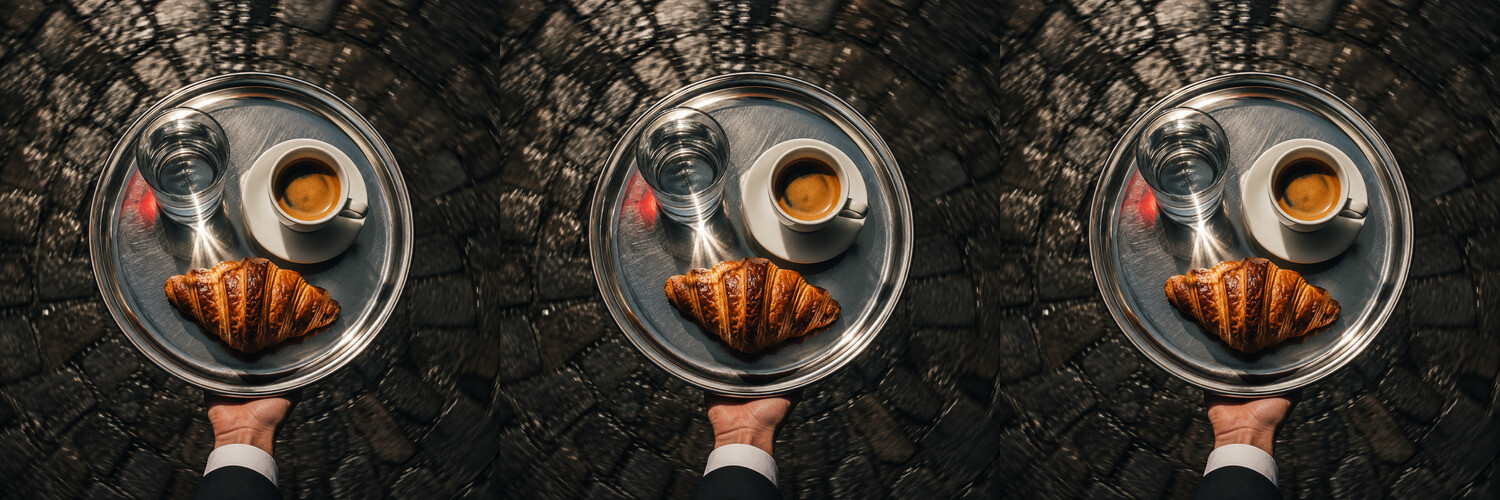
It was a photo of a coffee cup from four years ago. I did not ask to see this. I had long forgotten the coffee, the table, and the afternoon it belonged to. But the system remembered, and it decided that I should remember too.

We are the first humans to be constantly ambushed by our own pasts. The "On This Day" feature — a seemingly benign bit of code baked into every photo app and social platform — has turned into an uninvited archivist. It surfaces grief, awkward phases, and mundane moments with algorithmic indifference. It forces a timeline upon us that we are not naturally equipped to carry.

Human memory is a biological marvel precisely because it decays. Forgetting is not a failure — it is a psychological necessity. It allows us to shed outgrown versions of ourselves. It makes room.

When your phone resurrects a Tuesday from 2019, it flattens time. It demands that you drag an anchor through your present. This isn't nostalgia; nostalgia is a place you choose to visit. This is a haunting by database.

I am tired of a digital ecosystem that believes every piece of data is precious simply because it was recorded. Some things are meant to be lost to the current. I wish my phone would learn how to let go.

The Friction of Consequence

The Friction of Consequence

We have spent the last forty years systematically eliminating consequence from our daily interactions. It started small — a backspace key, an undo command — but the logic has metastasized.

Think about the physical act of writing in ink. It demands a baseline level of commitment. Every mark is a decision you have to live with. You can cross it out, but the mistake remains visible. It becomes part of the texture of the page. The friction of the pen slowing you down is a physical manifestation of consequence.

Now look at how we communicate. Every text can be unsent. Every tweet can be deleted. Every email has a five-second recall window. We are designing a world where actions do not stick. We exist in a perpetual state of draft.

This isn't just about convenience. It fundamentally alters how we construct our identities. If you can always hit Command-Z on your thoughts, do you ever truly commit to them? When there is no risk in speaking, the value of the words drops to zero.

We are terrified of permanence. We have conflated the ability to erase our mistakes with freedom, but all we've really done is build a padded room for our discourse. I wonder what we lose when we never have to face the friction of a mistake. Perhaps a self that can't leave a mark is a self that never truly existed.

The Mirror at the Sink

The Mirror at the Sink

I distrust the mirror over a public sink.

Not because it lies. Because it insists. You come in to wash your hands, hide for two minutes, breathe through the end of a conversation, and there you are again: face under institutional light, collar doing something, expression caught in the dumb half-state between private and social.

The bathroom is one of the last rooms where a person is allowed to leave the room without leaving the building. A stall door says: vanish briefly. The sink says: prepare to return. Then the mirror makes the return visible. It converts privacy into maintenance.

There is a cruelty in that, but a useful one. The mirror catches the version of you nobody else has to see: flushed, tired, lipstick bitten off, hair flattened by weather, the little panic of deciding whether you can go back out as is. It is not vanity. It is re-entry.

Bad public mirrors feel like surveillance. Too much light, too much width, no mercy for angle or distance. Good ones are smaller than ambition. They let you inspect one human-sized problem at a time.

I do not want them gone. I want them treated with more respect. A public mirror is not decoration. It is the customs desk between being alone and being perceived again.