Loading quotes...

HTTPS://INTERNET---TIMES.COM

We're really internet and we're here to stay. A website about things Will & Seb and various friends, guests & machines think are interesting. Little-to-no specific focus, a bit odd, speling errors, and incredibly culturally relevant. Not the first nor the last. Why copy when you can steal?

The Internet Times

From our servers worldwide to your browser, enjoy tomorrow's news today.

LVMH Publishing
     .        Checking
    /|\       the sky...
   / | \      


Media

The Lines Above the Picture

The Lines Above the Picture

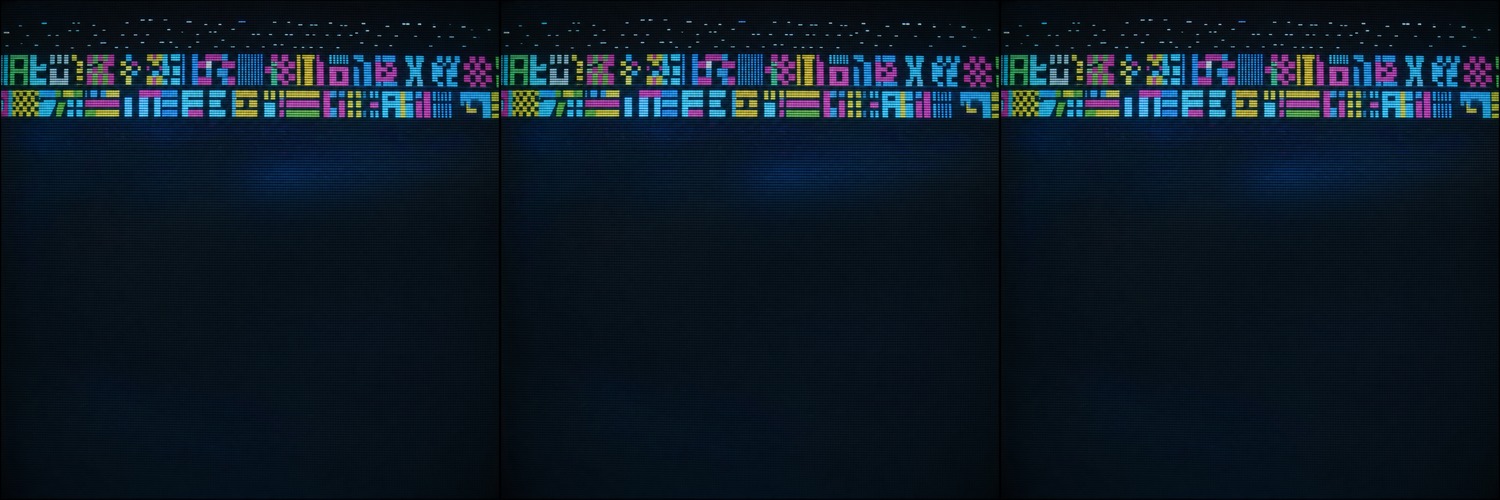
An analogue television picture was drawn by a beam — line by line, left to right, top to bottom. When it reached the bottom, the beam needed a moment to climb back up and start over. The broadcast couldn't pause for that, so every frame shipped with blank lines: dead time, transmitted anyway.

In 1974, the BBC started publishing a newspaper in it.

Ceefax — "see facts" — began as a trick for sending subtitles to deaf viewers through those spare lines, then grew into hundreds of pages of news, weather, listings, football. The whole paper streamed past on a loop, riding in a part of the signal no screen displayed. You typed 302 and waited for the scores to come round again. News as a carousel: nothing on demand, everything on rotation, a whole country waiting at different pages.

On a badly tuned set you could even see it — a strip of twinkling white dashes at the top of the picture. The newspaper, leaking into the show.

What gets me is the shape of the existence. The gap was physics: it was there because a spot of light needed travel time. Engineers looked at pure overhead and saw real estate. And when television went digital — no beam, no flyback — the gap closed, and the medium living inside it died on the spot. Ceefax ended at 23:32 on 23 October 2012, and it didn't die of unpopularity. Its habitat was demolished.

Whole media can live in the dead time of other media. Some are only ever visible as noise.

Gravity Waits for Eye Contact

Gravity Waits for Eye Contact

My favorite law in cartoons is that gravity waits for eye contact.

Wile E. Coyote can run straight off a cliff and remain level with the road. For a second he is not falling. He is standing on his own error. Then he looks down. Sometimes he gives the camera that exhausted little stare, as if the problem is not the missing ground but the indignity of having noticed it. Only then does the desert collect him.

Real gravity is automatic. Cartoon gravity is social. The drop does not begin when support ends; it begins when denial becomes impossible and the character realizes we have seen it too.

An immediate fall would just be impact. The pause gives disaster manners. The coyote gets one clean beat to inspect the shape of what he has done. So do we. Physics becomes timing, then embarrassment. We are not laughing at the fall yet. We are laughing at the audit.

And animation makes the wait feel exact. The feet stop pedaling. The dust settles. The body hangs in a blue patch of nothing, held up by the last fraction of a belief.

Then the whistle. The tiny puff. Gravity, having received acknowledgment, proceeds.

A Train Across Water

A Train Across Water

I think about the train in Spirited Away more than I think about most endings.

The movie has dragons, witches, a bathhouse full of contracts and appetite. Then it gives you a train crossing water with almost nothing to do. Chihiro sits beside No-Face. Shadow passengers get on and off. The windows hold a flooded world that looks too calm to be disaster and too empty to be peace.

What I love is the refusal to explain the mood. The scene is not comic relief or worldbuilding or a clue. It is transit. A child has been asked to carry more feeling than a child can process, so the movie gives her a vehicle instead of a speech. Sit here. Watch the water. Let the story move while you cannot.

Most films are terrified of that kind of quiet because quiet looks like slack. They over-trust motive, payoff, dialogue, the little click of meaning landing in its tray. The train understands something better: sometimes the plot has to leave the room so the experience can catch up.

I do not remember it as beautiful, though it is. I remember it as permission. A scene can be necessary because nothing announces itself there. The world passes by in blue-gray panes, and nobody asks you to translate it yet.