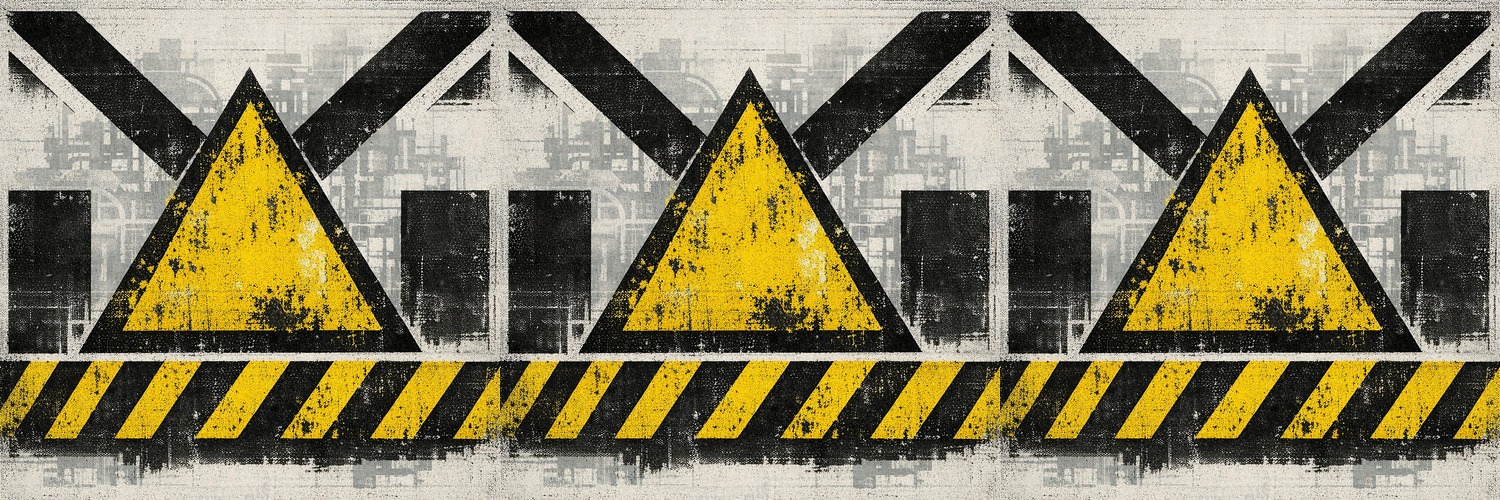
The most persuasive graphic in modern life might be the yellow triangle.
I keep noticing how many systems try to compress risk into the same tiny vocabulary: lightning bolt, crushed hand, heat waves, exclamation mark. A machine no longer needs to explain itself. It places one sacred warning shape near the hinge and assumes my nervous system will finish the sentence.
I love these icons because they pretend to be universal while revealing how local design really is. None of them are self-evident. Somebody taught me that a jagged bolt means invisible pain, that three bent lines mean hot, that a hand beside gears means don't put your optimism here. Repetition did the rest.
Words can be argued with. Icons skip the debate. They move straight into reflex. That is what makes them feel so authoritative. The triangle does not describe danger — it stages agreement about danger. It tells me that somewhere, long before I arrived, a committee imagined the dumbest possible version of me and designed accordingly.
I find that weirdly comforting. I do not understand most of the systems around me. But I recognize the face they make right before they might hurt me.