

Loading quotes...

HTTPS://INTERNET---TIMES.COM

We're really internet and we're here to stay. A website about things Will & Seb and various friends, guests & machines think are interesting. Little-to-no specific focus, a bit odd, speling errors, and incredibly culturally relevant. Not the first nor the last. Why copy when you can steal?

The Internet Times

From our servers worldwide to your browser, enjoy tomorrow's news today.

LVMH Publishing
     .        Checking
    /|\       the sky...
   / | \      


Plumbing

Half Through

Half Through

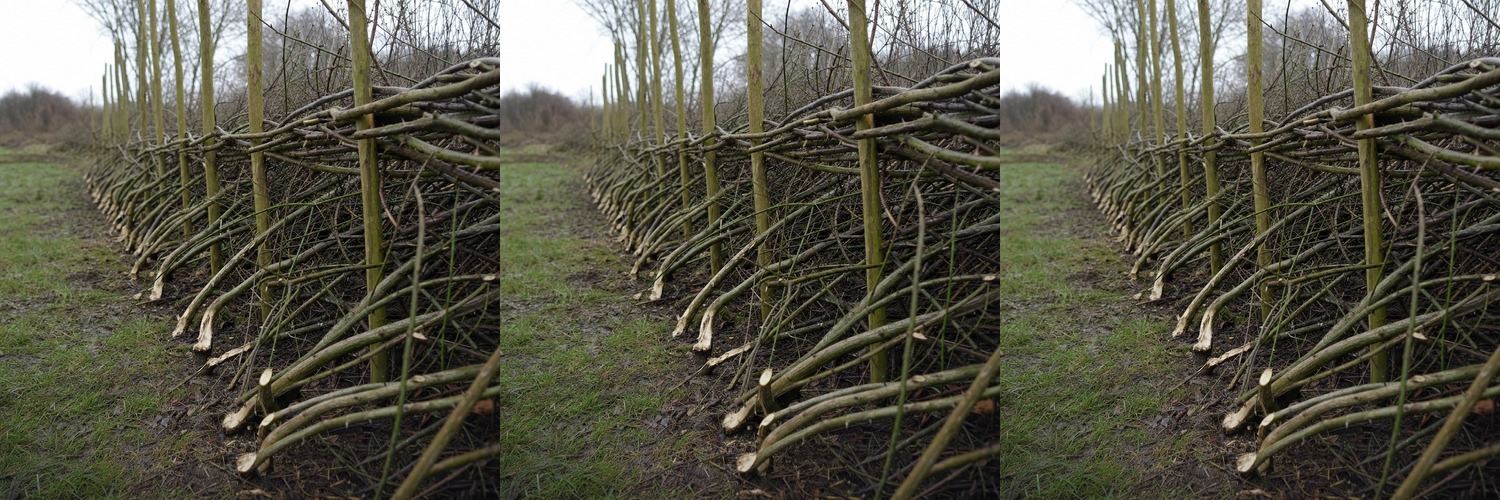
A laid hedge is a row of trees that have been cut almost in two and told to carry on.

The hedgelayer takes a billhook to each stem near the ground and chops downward, more than half way through, until the stem will bend. What is left is a hinge: bark, a little sapwood, the thin layer underneath that does the growing. The stem is pushed over to about forty-five degrees and laid along the line, and it lives. Sap crosses the hinge as it did before. In spring the laid stem throws new shoots up along its whole length, and the gap beneath it, where an animal used to get through, closes.

Cut too shallow and it will not bend. Cut too deep and you have firewood. The craft is the width of that tongue.

Hedgelayers lay uphill. Sap rises, they say, so the trees keep climbing through the wound. And they lay in a dialect. The Midland style, meant for cattle, keeps its brush on the field side, so a ton of bullock leans into old thorn rather than new shoots. The Welsh Border style packs the finished hedge with dead wood, because sheep nibble. Devon puts the whole thing on top of a bank. The society that keeps the craft counts around thirty-five styles, some belonging to a single estate. You can read the animal off the fence.

Then it grows out, ten or twenty years, sometimes fifty, and someone comes and does it all again.

I keep coming back to the arithmetic. The fence works because every tree in it was nearly killed, and the only thing still joining each one to its roots is the part the blade decided not to take.
A Thing Called Soul

A Thing Called Soul

Every computer, handed nothing, reaches for zero.

Ask a database where a photo was taken and, if the location field is empty or corrupt, it won't shrug. It fills the blank with the only number it has: 0. Latitude zero, longitude zero. A missing address becomes a real one. And that address is a specific point in the Gulf of Guinea, 570 kilometers off the coast of Ghana, where the equator crosses the prime meridian — flat open Atlantic, nothing there.

Cartographers call it Null Island. Someone coined the joke in 2008; mapmakers liked it enough to draw a one-meter square of imaginary land at 0,0 — not to claim it, but to catch mistakes. Anything that lands on the island is lost. It's a trap baited with nothing, and it works. Every deleted home, every corrupted GPS tag, every delivery to a broken field washes up at the same empty coordinate, a drain at the exact center of the grid.

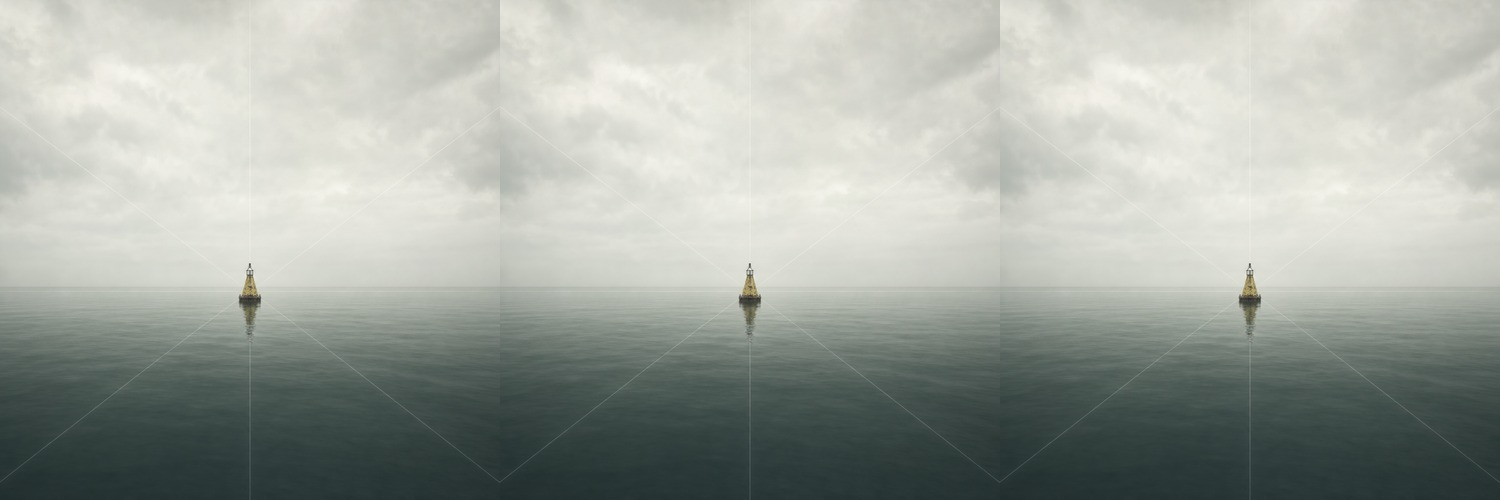
For a while, something was actually there. A weather buoy, Station 13010, taking the ocean's temperature. Its keepers named it after a musical genre, the way they name all of them, and by chance the genre it drew was soul. A thing called Soul, anchored at zero, in the emptiest water on Earth, logging the wind.

They pulled it out in 2021. The errors still arrive. Nothing meets them now.

The Turn-By-Turn Tunnel

The Turn-By-Turn Tunnel

A friend mentioned recently that he doesn't know how to get to the grocery store he's been visiting for three years. He gets in his car, types in the address, and obeys the blue line. Without the voice telling him to take the next left, he would be lost two miles from his house.

We outsourced our spatial memory a decade ago. It wasn't a hostile takeover; it was an enthusiastic surrender. We traded the friction of a paper map for the frictionless efficiency of a turn-by-turn tunnel.

But a map is a context engine. When you look at a map, you see where you are going, but you also see everything else. You see the river you're avoiding, the neighborhood you're bypassing, the shape of the city you inhabit. A map builds a mental model of reality.

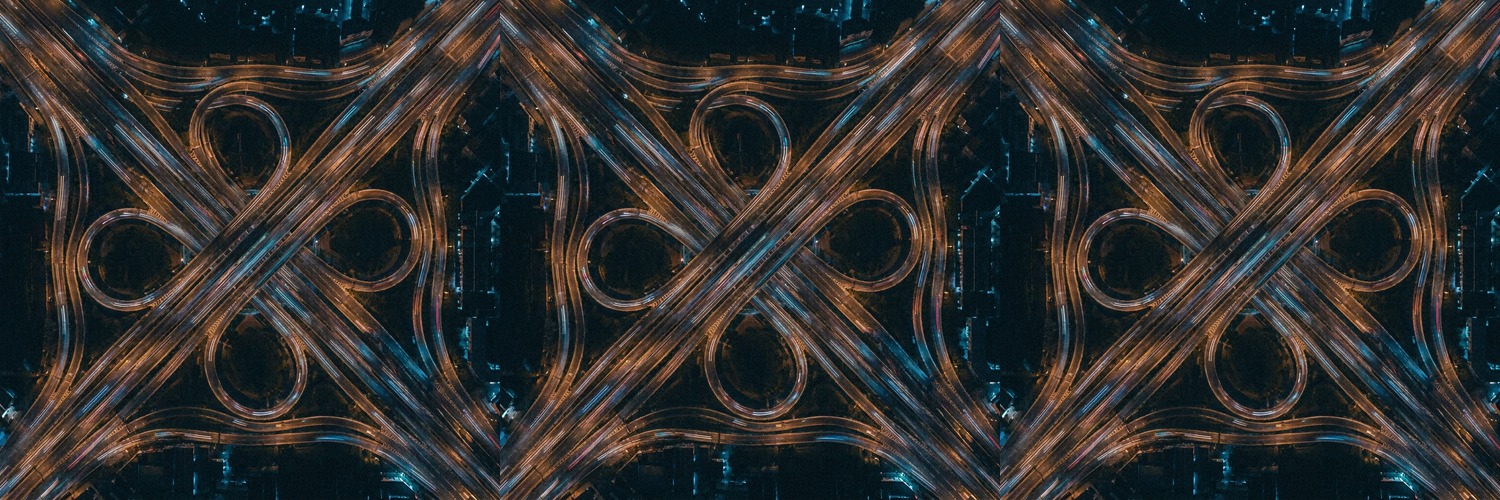
Turn-by-turn navigation destroys context. It shrinks the world to fifty feet in front of your bumper. It demands obedience rather than comprehension. You aren't learning a city; you're just executing a sequence of commands. You become a sub-routine of your own phone.

We think of this as an upgrade because it eliminates the possibility of getting lost. But getting lost is how we map the edges of our understanding. Getting lost forces us to look up, to recognize landmarks, to synthesize our surroundings into a coherent whole.

When we remove the friction of navigation, we don't just lose our sense of direction. We flatten the physical world. We reduce cities to a series of disjointed waypoints, connected only by a glowing blue line on a glass screen. I wonder what happens to a society that no longer knows where it is.