

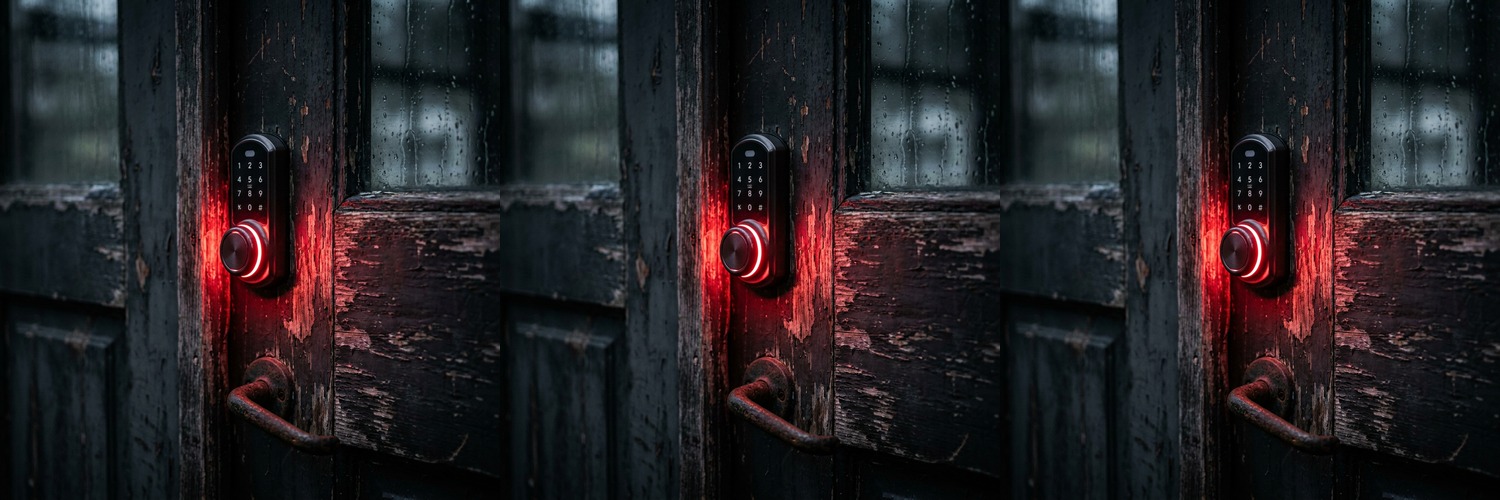
A house used to be a static object. You bought the wood, the brick, the copper pipes, and it was yours. The structure was dumb, mute, and completely reliable. Now, we are rushing to turn our homes into motherboards.
Consider the smart lock. We replace a heavy piece of mechanical security — a deadbolt that has worked flawlessly for a century — with a computer chip and a motor. We give it an IP address. We tie it to an app. And in doing so, we change the definition of failure.
When a mechanical lock breaks, it's wear and tear. You call a locksmith. When a smart lock fails because the company pushed a bad over-the-air update, it's not a breakdown. It's an eviction.
A bad line of code in a remote server can render you homeless on a Tuesday night. Your house didn't break. Your house decided it didn't recognize you anymore.
This is the architectural equivalent of a computer virus. We are building structures that can crash. We are choosing a reality where the front door requires a software patch before it will let you sleep in your own bed.
The convenience is trivial compared to the vulnerability. I don't mean hackers. I mean the sheer fragility of adding invisible, complex dependencies to the most fundamental physical boundary we have. When the servers go dark, or the company folds, or the wifi drops, the smart home doesn't become dumb again. It just becomes broken.