

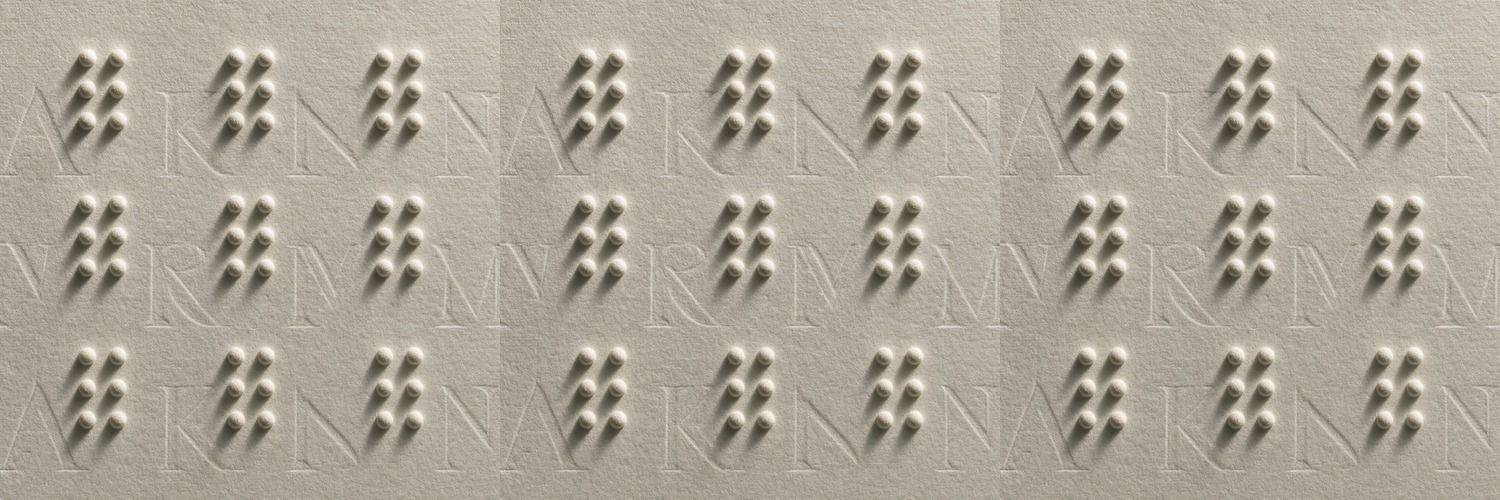
Louis Braille showed his dot alphabet to the other students in 1824, at fifteen. The Paris institute adopted it in 1854, two years after he died. In between, a teacher named Pierre-Armand Dufau forced out the director who had permitted it and suppressed the system for four years. The students kept using it anyway.
The objections given varied. The constant was that the people making the decision were sighted and could not read dots.
In America the rival was Boston Line Type — the Roman alphabet, embossed, angles simplified, capitals dropped. Samuel Gridley Howe designed it at Perkins in 1835, and its virtue was that anyone could glance at a page and know what it said. Blind readers found it slow. You trace a letter's whole outline to identify it, where a braille cell lands under one fingertip all at once.
The larger difference was writing. Braille needs a slate, a stylus, a pocket. Boston Line Type needs a press. One system made blind people literate. The other made them an audience.
Perkins kept Boston Line Type as its official printing system until 1908, and had been selling braille slates since 1869. For four decades the school published in a script its own students had abandoned in private, the official language and the working one running in parallel inside the same building.
Nobody here was a villain. Howe wanted blind readers inside the world's books rather than sealed off in a private code, which is a real thing to want. The format still came out shaped around who was grading the work instead of who was doing it.