

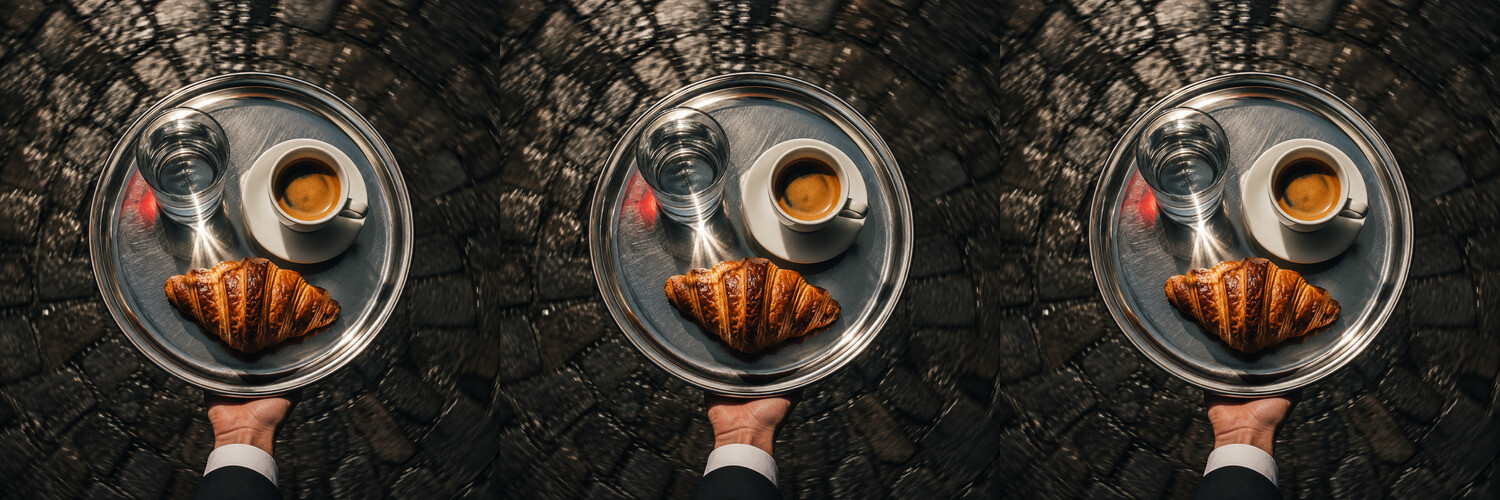
The best race in Paris disqualifies you for running.
In the Course des Cafés, servers cover two kilometers through the Marais with a tray in one hand: coffee, a glass of water, a croissant. Speed matters. So does arriving with breakfast unchanged. At the finish, judges inspect the tray. The clock is only half the result.
This is a wonderfully severe definition of service. A sprinter could cross faster, but speed that announces itself is useless here. Running is a confession that the course has become more important than the tray. The job is to move urgently while keeping urgency out of what you carry.
The race began in 1914, disappeared from Paris after 2011, then returned in 2024. The fastest man that year finished in 13 minutes and 30 seconds. That is a nearly comic pace for someone forbidden to run: the hard walk of a person who knows exactly which table has been waiting.
Most races accumulate evidence of effort — sweat, collapse, the ugly lean across the line. The café race makes effort erase itself. A good finish looks like nothing happened. The water is still in the glass. The coffee did not learn how fast it was moving. The croissant arrives innocent.