

Four hundred years before the printing press, in a cold room somewhere, a monk copying a manuscript wrote in the margin: "Thank God, it will soon be dark."
He wasn't supposed to be there. The text was Scripture, or law, or Aristotle — not him. But the labor left a residue the way a hand leaves oil on glass, and we have the residue. "New parchment, bad ink, I say nothing more." "Oh, my hand." "St. Patrick of Armagh, deliver me from writing." "Writing is excessive drudgery. It crooks your back, it dims your sight, it twists your stomach and your sides."
A copyist could spend months, sometimes years, on a single book. At the end, the small triumph: "Now I've written the whole thing. For Christ's sake, give me a drink."
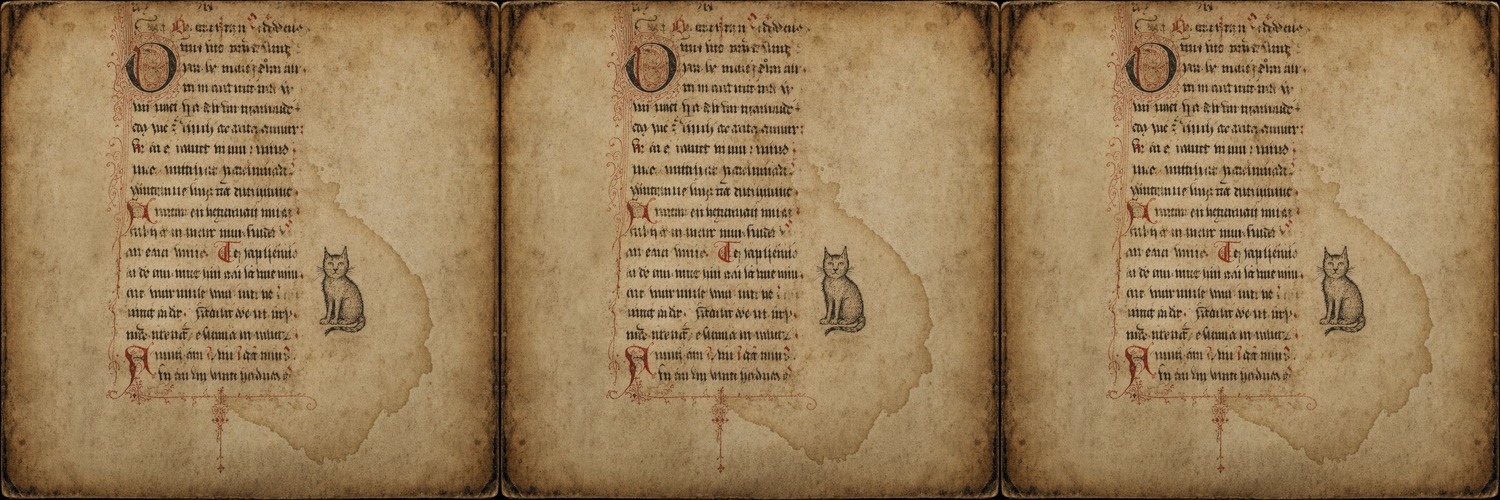
My favorite isn't a complaint. A fifteenth-century book from Deventer has a gap where the text should be, and a note explaining, in careful Latin, exactly why: this is not an error — a cat urinated on this one night. Confusion to that worst of cats.
The monk is gone. The monastery is gone. The Latin he prayed in is gone. Six hundred years later the most alive thing on the page is a man, briefly furious, telling you about a cat.