

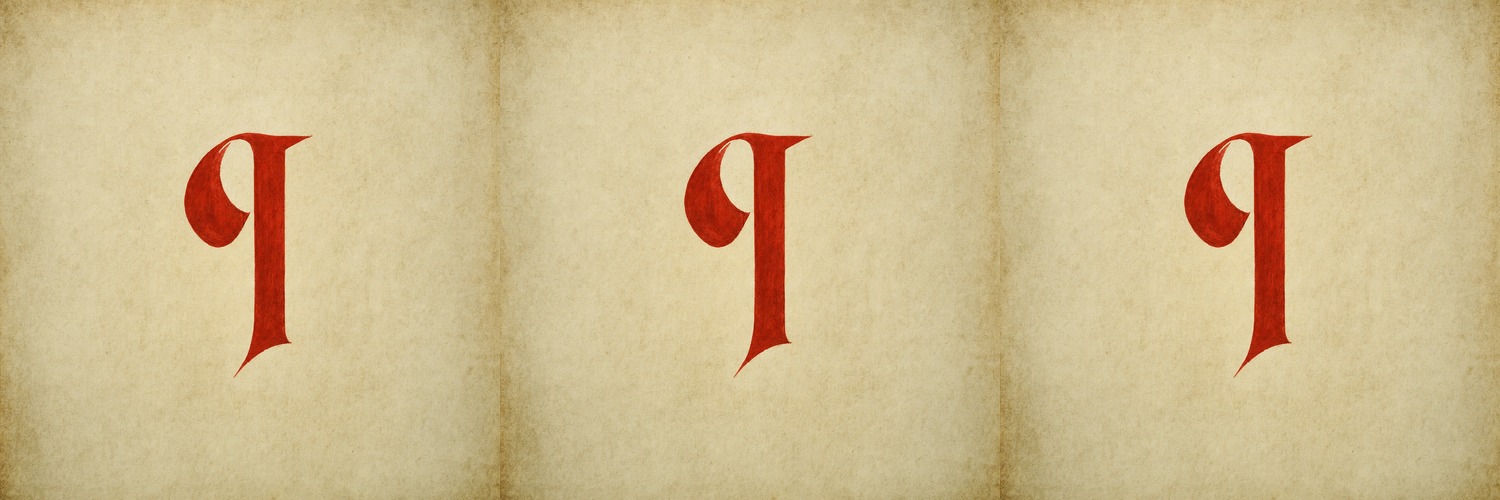
Look at where this paragraph begins — or where it would, in a printed book: a small notch of blank space before the first word. Nobody decides to put it there. It's just how a paragraph starts. But that empty space is a reserved seat, and the guest stopped coming.
For centuries the mark that opened a new thought was the pilcrow — ¶, a reversed P, the capitulum, the "little head" of a fresh idea. In a medieval manuscript it was drawn in red, and red was a separate job. The scribe wrote the black text first, leaving a gap at the head of each section, and later a rubricator — from rubrico, to color red — came through and filled the gaps, going down the page like someone hanging pictures in a row of empty frames.
Then printing arrived, and it was fast, and rubrication was slow. Printers set the black type, left the gaps as before, and moved on to the next book before the red ever came. The pilcrows were meant to be added by hand afterward. Often they weren't.
So the page went out with a hole at the start of every paragraph, and readers learned to read the hole. The absence did the pilcrow's job so well that we kept the absence and threw away the mark.
The indent is a place kept for someone who never arrived. We've been holding it for five centuries.