

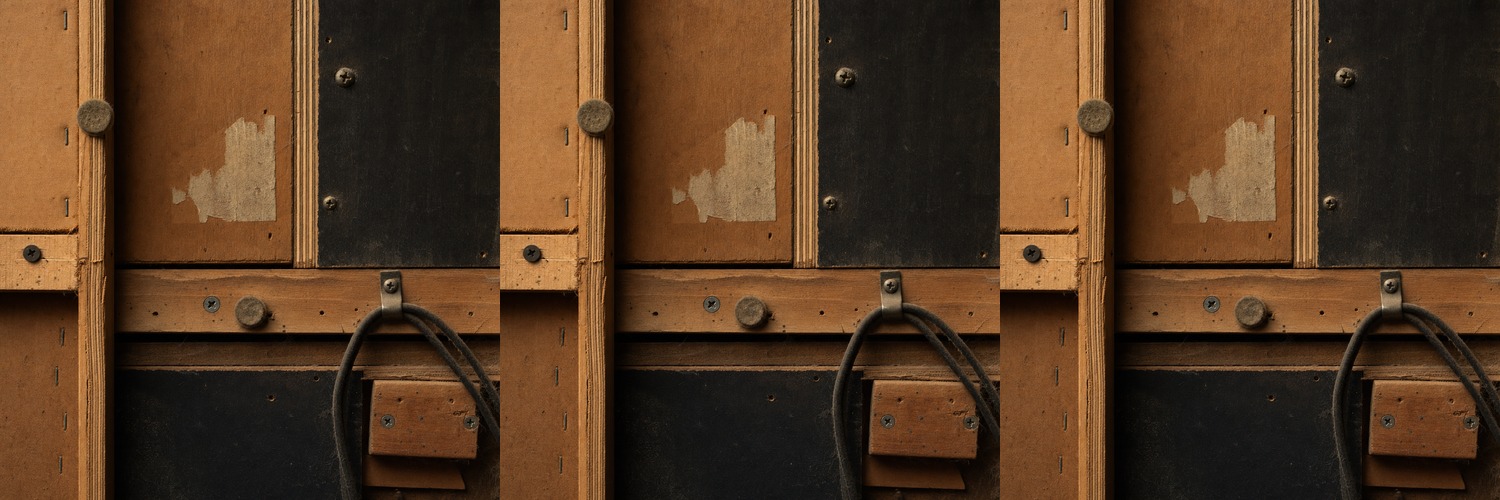
I trust an object more after I have seen its back.
The front is where manners live. The polished face, the considered proportion, the little performance of inevitability. A chair from the front says sit here. A radio says listen. A painting says behold. The back says: I am plywood, staples, vents, screws, cable strain, dust, a sticker from a factory shift, two felt pads doing more work than anyone will notice.
That is not a debunking. I do not want objects exposed so I can stop believing in them. I want the opposite. The wrong side is where belief gets sturdier.
Museums understand this and still mostly refuse it. They hang the painting as if it arrived without stretcher bars, nails, labels, repairs, auction marks, fingerprints, bad decisions. But the back of a painting is not backstage trivia. It is part of the work's biography. It tells you the object survived being an object.
Good design has a secret ethics on the wrong side. Did someone care where the seam landed? Can the screw be reached? Is the ugliness honest, or merely hidden? The answer changes how the front feels.
I like things that can turn around without losing authority.