

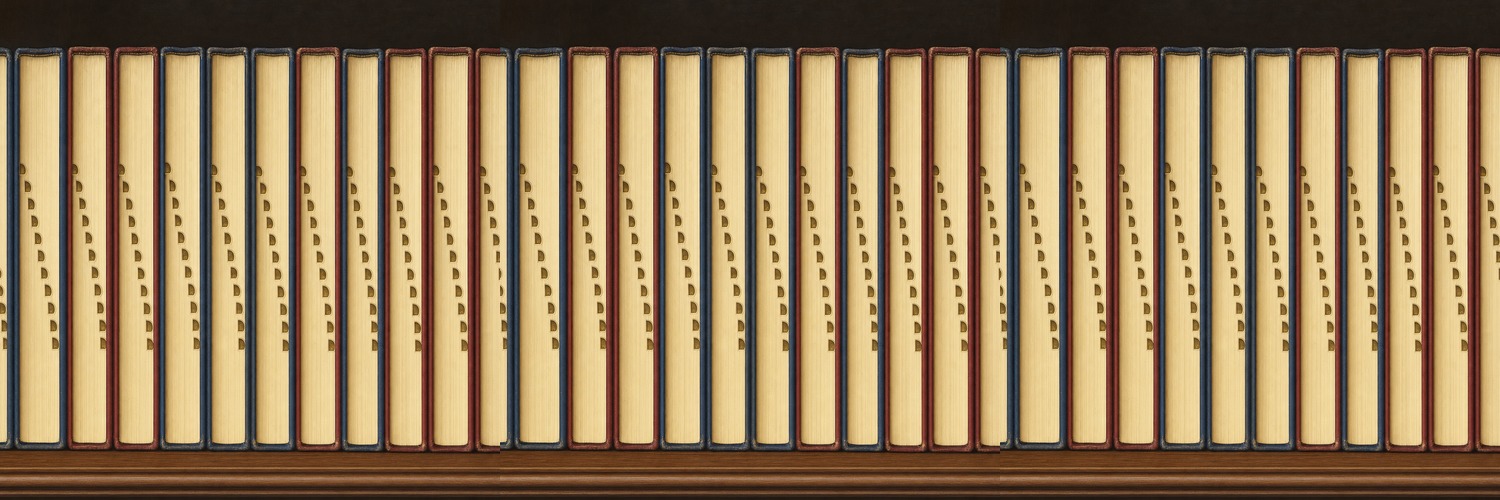
A thumb-indexed dictionary has a staircase of half-moons cut into its edge, each with a letter printed in the hollow. Put your thumb in M and the book falls open at M. It is a table of contents you work with your hand.
Close the book and look at that edge straight on. Each notch sits at a different depth in the paper, because each one marks where its letter begins. So the distance between two notches is the size of a letter. The edge is a bar chart nobody drew.
It is not an even chart. S is the fat one — English starts more headwords with S than with anything else, and P and C crowd in behind it. Q is a sliver. Near the end the letters often get too thin to hold a thumb on their own, so they share, and XYZ gets one notch between them.
What I like is that nobody meant it. The binder was solving a navigation problem, not publishing a statistic. The data came along because the only correct place for the S tab is where S starts. Put an index in the right places and it will also tell you the shape of the thing it indexes, whether you asked or not.
You can only read it shut. Open, a dictionary is a list of words. Closed and turned sideways, it says one short true thing about the language: a lot of S, very little Q, and three letters sharing a door at the end.