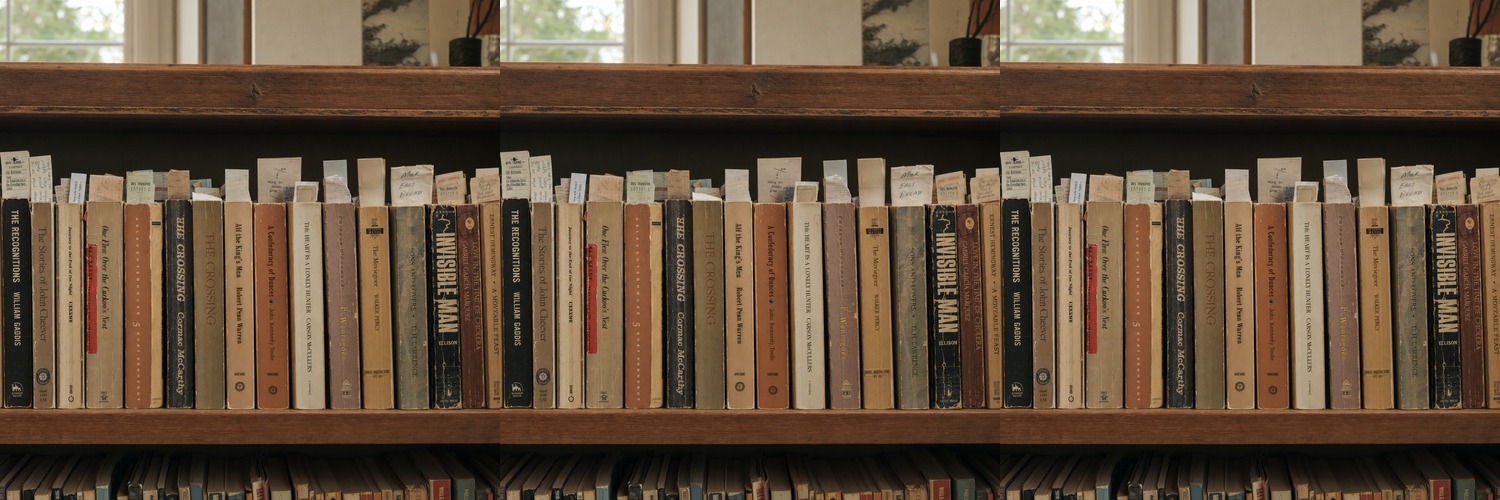
A secondhand book sometimes arrives with a stranger's place still in it. A receipt at page 112. A bus transfer. A grocery list with eggs crossed off.
It is the most exact thing you will ever know about that person. Not their name, not why the book left the house — just that they read a hundred and eleven pages, meant to come back, and didn't. A bookmark is a small promise to a future self. This one was boxed up and sold with the promise still inside.
I don't read it as a verdict on the book. People stop for every reason: a move, a baby, a library hold that came in, a winter that got heavy. Page 112 is not where the book failed. It is where life got in.
What I like is what it does to the next reader. For a hundred and eleven pages you are behind someone. Their attention went first and you are walking in it. Then you turn the leaf that held the receipt, and the book changes. As far as you can know, nobody has been here. Every page after is a place they could have gone and didn't.
The obvious move is to throw the receipt out. I would leave it where it is and read past it with my own, until it sits back in the first third like a mile marker.
Shut, the book holds both of you. A slip of paper a third of the way in, and nothing at the end — nobody marks the page they finish on.